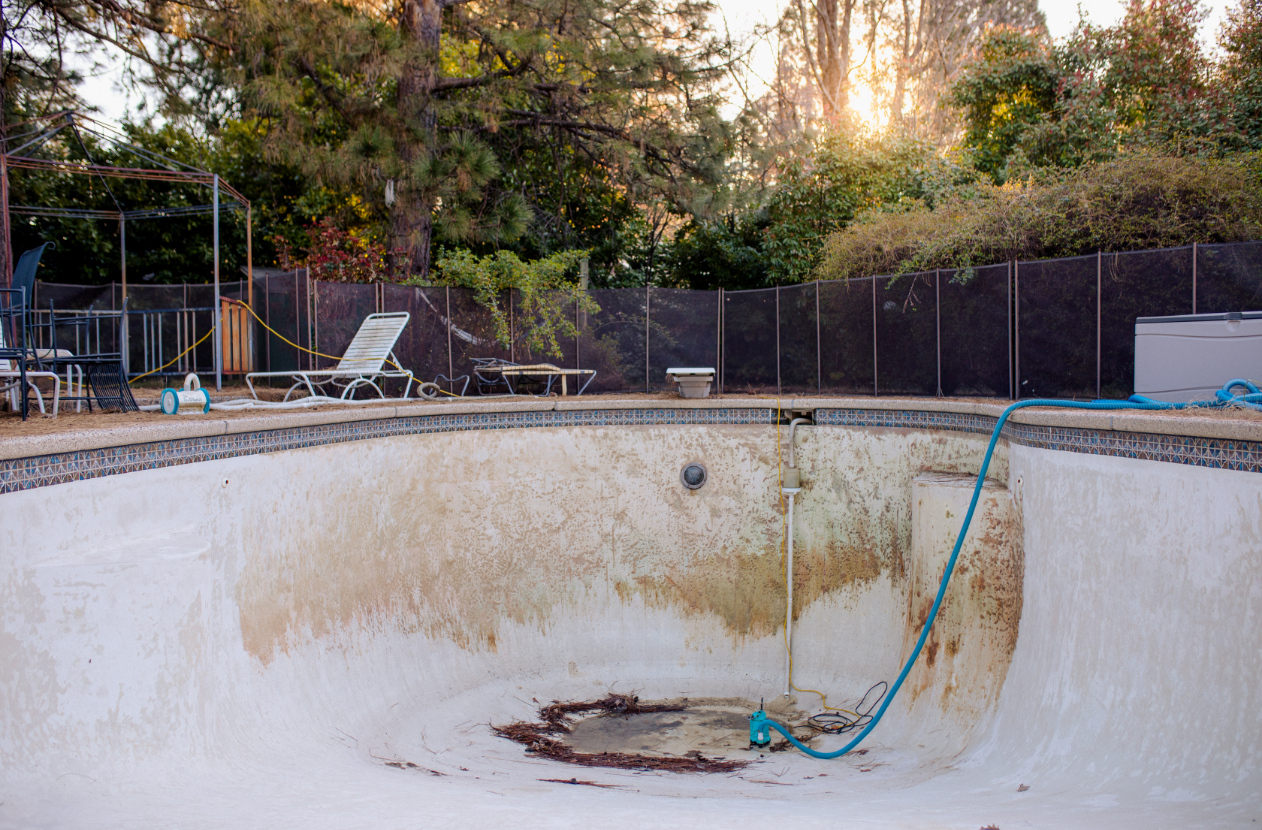
A dark smudge near the return jet. A rough patch under bare feet on the steps. A chalky white haze spreads across the deep end floor. Each of these looks like a problem, but they are not the same.
Appearance alone cannot tell you whether you are looking at a surface stain, mineral scale, or a plaster finish that is genuinely wearing out underneath. Missing the real cause here tends to cause more trouble down the road: treating worn plaster like pool stains leaves the underlying damage untouched, and treating normal wear like a crisis can mean paying for resurfacing before it is actually needed.
If you’re an Arlington pool owner trying to make sense of what you’re seeing before deciding what to do about it, follow this guidance from Aquamaid.
Why Pool Stains Show Up in the First Place
Most pool stains trace back to one of a few root causes, and understanding which one applies to your pool determines what actually fixes it.
- Copper stains often originate from copper pipes in the plumbing or from copper-based algaecides added directly to the water.
- Iron stains are commonly caused by rusty pool equipment, including corroding ladders, fasteners, or an aging pool pump housing. Corrosion inside older equipment is one of the most common sources of this kind of staining.
- Calcium scale forms when pH and calcium hardness run high at the same time, leaving mineral deposits on tile and plaster.
- Organic stains come from living or natural debris, including leaves, berries, and algae that break down against the surface.
- Improperly balanced water is the thread connecting most of these. When pH, alkalinity, and calcium hardness sit outside their normal ranges for extended periods, staining and scaling both become more likely.
Most of these causes overlap. A pool can pick up iron from aging equipment while also running high on calcium hardness, which means more than one root cause is often at play at the same time.
Reading the Color: What Your Pool Stains Are Trying to Tell You
Pool stains generally fall into two broad categories: organic stains and mineral and metal stains. The color on your pool surface is usually your first and best clue about which category you are looking at, though it is not proof on its own.
Calcium and Mineral Deposits
Calcium stains typically show up as white or gray deposits, often with a slightly rough or crusty texture. Calcium buildup is common in almost every pool over time, so finding some on the tile line or around fittings is not automatically a sign that anything is wrong. When deposits thicken, spread across broad areas of the pool walls, or start affecting how the surface feels, you shouldn’t wait to correct them.
Metal Stains
Metal stains carry more specific color signatures. Iron typically produces reddish-brown discoloration, while copper stains tend to appear blue-green or sometimes a dark gray-black depending on how long they have been present. Both usually show up as surface stains that follow a pattern, tracking down from a return line, clustering around a light niche, or forming where pool equipment made contact with the water.
Occasionally, staining that looks metallic does not match the typical iron or copper pattern. Manganese, another naturally occurring mineral, can produce its own discoloration when present in fill water or introduced through certain algaecides and treatment products.
Organic Stains
Organic stains, by contrast, are typically greenish-brown and trace back to leaves, twigs, berries, and other debris that settle on the floor or walls and are not removed promptly.
Algae is green and contributes here as well, though it is worth noting that stains left behind after an algae bloom has already been killed do not always respond the way people expect. The stain itself, as opposed to the live algae, can resist chlorine and scrubbing even once the water has cleared, which is a common source of confusion for pool owners trying to figure out why a spot will not lift.
When the Pool Surface Feels Different
Color tells you about pool staining. Texture tells you about something else entirely: whether the plaster or aggregate finish underneath has started to deteriorate.
Etched or chemically worn plaster does not just look different. It feels different. Run a hand across an etched area and you will typically notice a rougher, sometimes chalky texture compared to the smooth surrounding surface. Etching tends to concentrate around aggregate particles, tile inserts, and other transition points where the finish is naturally more porous.
According to the National Plasterers Council, this happens because water that is chemically aggressive, meaning low in calcium hardness, low in pH, or low in carbonate alkalinity, dissolves the more soluble compounds in the cement paste over time. Leaching leaves small pits and rough patches rather than a smooth, uniform pool finish.
A stain sits on top of the finish, while etching happens within it. A stain can often be lifted; etched plaster has already lost material and cannot be restored by cleaning alone.
Stains, Scale, or Worn Plaster: How to Tell Which One You’re Looking At
A few practical signs point toward a worn or failing finish rather than a pool that simply needs a good cleaning:
- Roughness that spreads. A single rough patch might be localized wear or old etching. Roughness expanding across large sections of the pool suggests the finish itself is deteriorating.
- Discoloration that returns immediately after cleaning. If a stain comes right back within a day or two of brushing and shocking, the color may be coming from within the plaster rather than sitting on top of it.
- Visible pitting or exposed aggregate. Small craters or areas where the aggregate beneath the surface coat is showing through indicate material loss, not surface debris.
- Cracking, hollow spots, or flaking. These are structural signs and go beyond anything a stain remover or chemical treatment can address.
- Consistent roughness at the waterline or around fittings. These high-wear zones often show corrosion and deterioration first, since they see the most chemical and physical stress.
If what you are seeing matches the first category from earlier (a defined color pattern with a smooth surface underneath), you are likely dealing with a treatable pool stain or scale buildup. If it matches this list, you are looking at wear that treatment will not reverse.
Your Tap Water Isn’t the Same as Your Pool Water
Be aware that the water coming out of your hose is not the same as the pool water once it has been treated with pool chemicals, balanced, and exposed to sun, heat, and swimmers for weeks or months. Arlington’s public water supply comes from surface water sources through the regional water system, and the city’s water quality reporting has generally classified local tap water as moderately hard.
Fill water chemistry shifts as chlorine, stabilizer, and evaporation change the balance over time, which is exactly why testing the pool water itself matters more than assumptions about the water source.
With year-round pool use in North Texas, it’s important to stay consistent with testing. A pool that runs nearly twelve months a year has more opportunities for water chemistry to drift out of range than one that sits closed for part of the year, which makes regular monitoring less optional and more of a baseline habit.
Quick Tests You Can Run at Home
A couple of simple diagnostic tricks can help narrow things down before you call anyone.
- Chlorine can be used to test for organic stains. Apply a small amount directly to the discolored area, and if it lightens noticeably, the stain is likely organic.
- Vitamin C, in the form of ascorbic acid, works the opposite way and is commonly used to test for metal stains, since it targets iron and copper deposits specifically.
Neither test replaces a full water analysis, but both can help you determine the general category before deciding on a treatment.
What Professional Testing Tells You
Testing your water is the most reliable way to move from a guess to an actual answer, and it is the step that separates a diagnosis from a hunch. A home test kit can screen for basic levels, but a professional water analysis will catch metals and imbalances that consumer kits often miss.
A complete test should look at chlorine levels, pH, total alkalinity, calcium hardness, metals, and overall saturation balance, which is how professionals describe whether water is likely to be corrosive to the plaster or prone to depositing scale on it. Testing for metals specifically identifies potential stain causes before you spend money treating the wrong problem.
Getting Stains Out Without Making Things Worse
Identifying the stain before treating it matters, because treatments that work on one type can actively worsen another. Chlorine helps remove organic stains but can worsen some metal stains, pushing dissolved metal further into the plaster instead of lifting it out.
Most homeowners searching for how to remove pool stains want one pool stain remover that handles everything. That product does not really exist, because organic stains, metal stains, and scale stains all call for different chemistry. Dealing with metal pool stains is a different process than dealing with calcium scale, and using the wrong solution can leave marks that are harder to treat than the original problem.
A quick way to think through the process:
- Identify the affected area and likely stain type using color and the chlorine or vitamin C spot tests above.
- Match the treatment to the cause. Metal stains typically respond to acidic stain removers formulated for iron or copper. Organic stains generally respond to chlorine shock treatments, often sold as a granular powder, applied with a stiff pool brush to work the treatment into the surface.
- Follow the manufacturer’s instructions exactly, since concentration and contact time both affect whether a product lifts a stain or damages the surface underneath it.
- Escalate if marks do not lift. Stubborn stains from significant calcium scale may require professional removal, acid washing, or, for heavier buildup, draining the pool for direct treatment with a pumice stone or acid-based process.
Each pool surface type requires a different approach here. What works on plaster is not automatically safe on a vinyl-liner pool, since the liner material reacts differently to abrasion and acidic treatment than a cementitious surface does.
There are plenty of stain removers on the market, but matching the product to both the stain type and the surface type is what determines whether treatment actually gets rid of the problem or just wears down the finish faster.
Habits That Keep Stains From Coming Back
A few consistent habits go a long way toward helping you prevent pool stains before they start, and protecting your pool finish in the process:
- Check water chemistry weekly, focusing on pH levels and calcium, since drift in either one is what allows scale and staining to start.
- Skim and vacuum regularly, especially after storms, to keep organic debris from settling long enough to leave a mark.
- Use a metal sequestrant if your fill water or equipment history suggests iron or copper exposure, since sequestering agents bind dissolved metals before they can stain the surface.
- Brush the pool on a regular schedule. A pool brush used consistently prevents dirt particles and early mineral deposits from settling into a stain in the first place.
- Avoid wire brushes on plaster or vinyl surfaces, since they scratch the finish and create rough spots where future staining takes hold more easily.
- Maintain proper pH levels consistently, which is one of the single most effective ways to prevent calcium scaling from forming at all.
Staying on top of all of this consistently is easier with routine professional maintenance built in. Regular service visits catch drift in pH or calcium before it turns into scale, and a technician checking equipment for early corrosion often spots the source of a future iron stain before it ever shows up on the surface.
If weekly testing and brushing are more than your schedule allows, our pool maintenance service in Arlington covers the routine work that keeps stains from starting in the first place.
When Cleaning and Chemistry Aren’t Enough
Some pool stains lift with the right treatment. Some scale dissolves with acid and patience. But when roughness has spread across large sections of the pool, when pitting has exposed the aggregate underneath, or when discoloration keeps returning no matter what you try, cleaning and chemistry corrections have reached their limit.
At that point, the surface itself needs an in-person evaluation for professional pool resurfacing in Arlington, rather than another round of treatment. An evaluation does not mean resurfacing is automatically the answer. It means someone qualified is looking at the actual surface instead of guessing from a photo or a description.
Once Resurfacing Is On the Table, Timing Matters
If an evaluation confirms that resurfacing is the right move, the next question is usually when to schedule it. Weather, desired swim dates, and the startup requirements for a new finish all affect the ideal window. Aquamaid helps you choose the best time of year to resurface a pool in Arlington, so your project is completed around your schedule while factoring in seasonal weather concerns.
Protecting a Fresh Finish From Day One
A brand-new pool finish can still develop staining or appearance problems if startup chemistry and early brushing are not handled correctly. That is a different issue from everything covered above. Diagnosing an existing finish and protecting a newly installed one are two separate processes with two separate sets of rules.
Our guide to care during the first 28 days after resurfacing covers what that early window requires, so a new investment does not run into avoidable problems right out of the gate.
The Next Step for Your Arlington Pool
Pool stains, scale, and worn plaster can look similar from across the yard, but they call for different responses, and guessing wrong means either wasted treatment or a finish that keeps deteriorating while you wait. Color tells you the likely category. Texture tells you whether the surface itself is intact. Water testing, covering pH, alkalinity, calcium hardness, and metals, confirms what your eyes and hands cannot.
Aquamaid helps Arlington homeowners work through exactly this kind of diagnosis before recommending anything. The best way to know for certain is a professional evaluation, not another round of guessing.
If your pool’s surface has you second-guessing whether you are looking at a stain you can treat or a finish that needs attention, reach out and schedule a pool resurfacing evaluation in Arlington with our team. We will help you figure out which one you are actually dealing with before you spend money on the wrong fix.