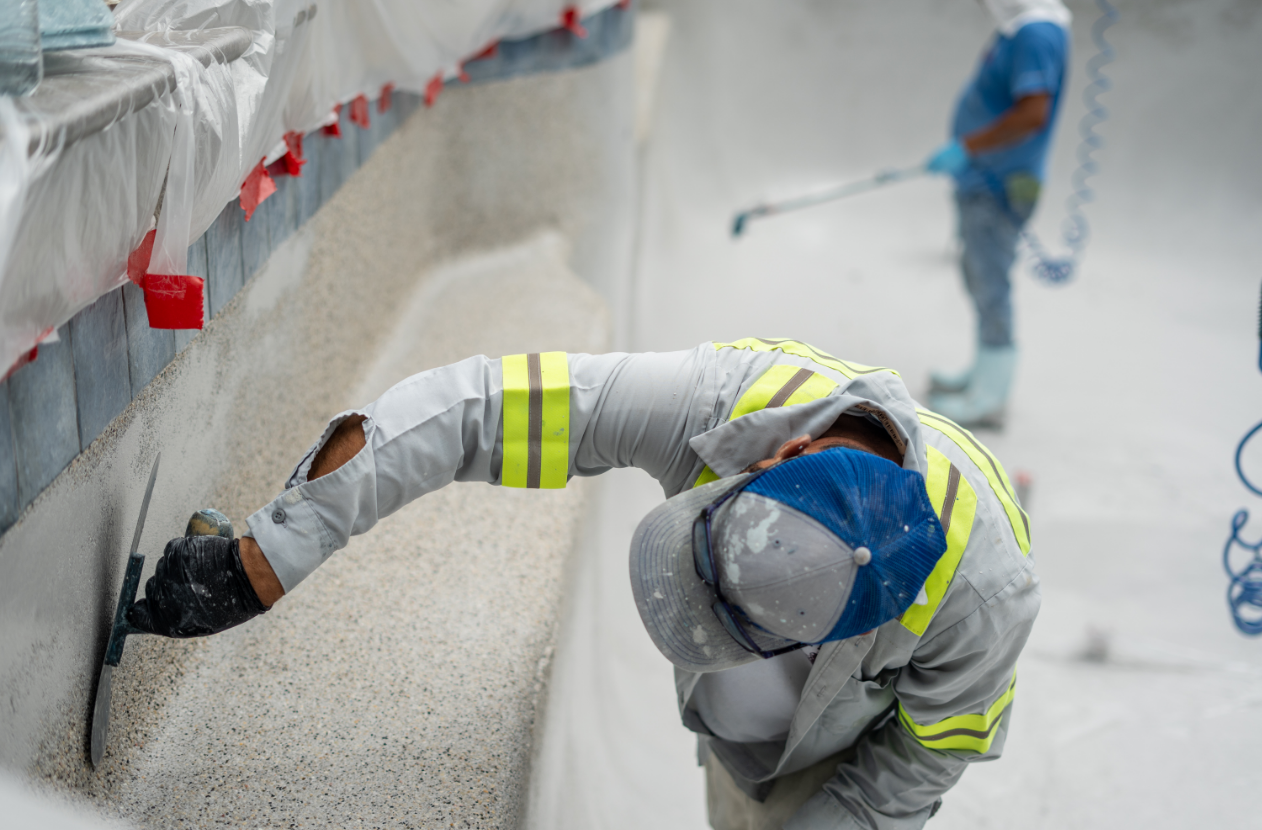
There’s no single month that works best for every Arlington homeowner planning a pool resurfacing project. The right window depends on your pool’s current condition, your target swim date, and how North Texas weather lines up with each stage of the job.
Getting the timing wrong can mean weather delays mid-project, a longer wait before you can swim, or a small surface problem spreading while you wait for a specific month to roll around.
Aquamaid fields this question often from Arlington swimming pool owners who notice rough patches, staining, or a surface that’s simply lost its shine and want to know when to book an inspection. We break down when to resurface pools in Arlington, what a realistic timeline looks like, and how to weigh spring against summer, fall, and winter based on your own priorities, not a generic rule.
What Heat, Freezes, and Storms Do to a Resurfacing Schedule
Arlington summers routinely push into the mid and upper 90s, with heat that can dry a fresh plaster surface too quickly if application isn’t managed carefully. Winter brings the opposite problem: the area typically sees its first freeze in late November and its last around mid-March, and application and curing generally need to stay above certain minimum temperatures set by the finish manufacturer.
Spring and fall carry their own complication, since North Texas rainfall is unpredictable and can arrive in short, heavy bursts that delay draining or interrupt a curing surface before it sets. That unpredictability is exactly why when to resurface pools here usually comes down to the short-term forecast right before your start date, not the season on the calendar.
A few conditions can push a project’s start date:
- Extended freeze warnings. Cold snaps can halt application and curing until temperatures climb back into an acceptable range.
- Heavy or sustained rain. Storms can flood a drained shell or wash out fresh material before it cures.
- Excessive heat. High temperatures can affect how the bond coat and finish coat set, depending on the product used.
Because several factors like these can show up in any season here, the actual go/no-go decision usually comes down to your contractor’s product specifications and the short-term forecast, not the calendar month alone.
When to Resurface Pools: Weighing Every Season
Factors beyond weather shape which season fits your situation, including how urgently your pool needs resurfacing and when you actually want to swim in it.
Spring
Milder daytime temperatures make spring appealing, but this is also North Texas’s most active thunderstorm stretch. A project timed for spring should build in a few flexible days in case rain pushes the schedule.
Summer
Summer gets your pool back in swimming shape fastest, since curing and startup align with the season you’ll actually use it. The tradeoff is intense heat, which can complicate finish application and raises algae buildup risk if startup water chemistry isn’t dialed in quickly. Extreme heat also increases both water evaporation and chemical evaporation rates, so newly filled pools need closer monitoring in the first few weeks.
Fall
Cooler, more stable stretches in September and October often give pool service teams steady working conditions with less rain interruption than spring. The finish has time to cure before winter, though the pool may sit unused through the cooler months.
Winter
Winter offers the least competition for scheduling and can mean a shorter wait for an inspection or start date… as long as the weather is mild. Freeze risk is the main constraint, and any project timed for this season depends heavily on avoiding hard freezes during application and initial cure.
No season eliminates every risk. The better question is which tradeoffs matter most to you this year.
Your Finish Type Sets Its Own Clock
Not every pool surface lasts the same length of time, and how long yours has left plays into when resurfacing becomes worth considering in the first place.
- Traditional pool plaster is the most common finish on plaster pools in this area and generally lasts around 7 to 10 years before it needs attention, which makes it the most cost effective option upfront even though it needs resurfacing sooner than other finishes.
- Quartz finishes, which blend plaster with quartz aggregate for added durability, typically last 10 to 15 years.
- Pebble finishes and other aggregate finishes, including exposed aggregate surfaces studded with small stones or glass beads, tend to hold up longest among plaster-based options, often 15 to 25 years, and give a natural, non-slip texture that many homeowners prefer for aesthetic appeal alone.
- Plaster surfaces in general need more attention over time than aggregate or fiberglass options, which is part of why pool resurfacing costs vary so widely depending on what’s already on your pool.
- Fiberglass pools work differently. Instead of a plaster surface, they rely on a smooth, non-porous gel coat that typically lasts 15 to 30 years depending on sun exposure, with full resurfacing usually not needed for 20 to 30 years.
Polished finishes and other premium options exist across most of these categories and generally push resurfacing costs higher in exchange for a longer interval before the next new layer is needed, along with a shorter curing time before the new surface can handle full sun and swimmers.
Knowing roughly how old your finish is gives you a head start when planning for pool resurfacing. A pool approaching the end of its expected lifespan is worth watching now, so you have time to schedule the inspection and line up a project during whichever season actually works for your calendar, rather than waiting until a failing surface forces the decision.
Confirm Your Pool Actually Needs Resurfacing
Timing only matters once you know resurfacing is the right call. A surface that feels rough underfoot but shows no other signs might just need consistent care rather than a full resurfacing.
The finish’s actual condition matters more than its age when it comes to deciding whether a pool needs resurfacing, and the appearance of several of these symptoms together, rather than just one, usually warrants a real inspection rather than a wait-and-see approach.
Early Warning Signs
Persistent staining, chalking or flaking plaster, a rough texture underfoot, and unexplained water loss are common early signs that a surface material has begun to break down, showing up as surface deterioration you can see and feel. Chalking in particular is a fine, powdery residue that signals the cement in the surface layer is breaking down.
If you’re seeing discoloration but aren’t sure whether it’s a chemical issue or actual finish failure, our guide to pool stains, scale, or worn plaster walks through how to tell the difference before you schedule anything.
Issues That Need Attention Now
Deep or structural cracks call for a professional look rather than a guess, since they can point to structural damage beyond the surface itself, and promptly addressing small cracks can prevent much larger, costly repairs down the line.
Once you suspect the surface itself is the problem, an inspection confirms the pool’s condition, which finish options fit your situation, and a realistic scheduling window. That evaluation is the logical next step for pool resurfacing in Arlington, TX.
Water Chemistry and Maintenance Buy You Time
Regular pool maintenance won’t prevent resurfacing forever, but proper maintenance can extend the interval significantly. Left untreated, these small imbalances compound into rough patches, staining, and eventually the kind of wear and tear that pushes a resurfacing timeline up by a year or two.
Pool Chemistry Concerns
Keeping pH levels and chemical balance in range protects both the pool water and the surface layer underneath it. Water quality and chemistry issues can negatively affect the pool’s finish:
- Unbalanced water chemistry accelerates surface degradation.
- Calcium deposits and scaling show up as rough surfaces and can leave a plaster surface looking dull well before it’s structurally due for replacement.
Staying on top of your pool chemicals matters just as much as any other part of ownership. Imbalanced chemicals speed up wear on the surface layer regardless of your pool’s size or finish type, and pools that get regular maintenance and consistent care tend to show wear more slowly, which buys you more flexibility in choosing a season.
Algae Issues
Recurring algae growth can point to a surface that’s grown porous enough to trap organic matter rather than a simple chemical imbalance. North Texas heat and high UV exposure accelerate all of this by breaking down chlorine faster than milder climates, which forces more frequent chemical adjustments to keep the water and the surface protected.
Brushing the surface regularly goes a long way toward protecting your investment between now and whenever it’s time to resurface.
Mapping Your Project Timeline From Drain to Swim-Ready
Once you decide to resurface your pool, the pool resurfacing process typically moves through five stages. Most Arlington projects run roughly one to three weeks from drain to refill, with the application portion itself often falling in the 5- to 14-day range.
Pool size, the extent of any repairs, the finish you choose, and weather all shift where your project lands in that window, so treat these as general guidelines and ask your pool service provider for a project-specific estimate:
- Draining. The pool is emptied to expose the existing surface.
- Preparation. Crews clean, inspect, and remove the old finish down to a sound base.
- Application. A bond coat goes down first, followed by the new finish material in one or more coats.
- Refill. The pool is filled, often continuously, per the product’s startup requirements.
- Startup. Water chemistry is balanced and the newly resurfaced pool is monitored closely in its first weeks before regular swimming resumes.
Our breakdown of the first 28 days after pool resurfacing covers what that refill and startup period actually involves, since it needs to fit your calendar just as much as the application days do.
An Empty Pool Shouldn’t Sit and Wait
Once a pool is drained, it shouldn’t stay that way longer than your contractor recommends. Pool surfaces and the shell beneath them can shift over time due to heat and the expansive soils common in this part of Texas, and an empty shell left too long is more exposed to that structural stress than one that moves promptly through prep, application, and refill. Structural issues that start small can affect the pool’s structure and its appearance for years if they’re allowed to progress.
If a scheduling gap opens up mid-project, ask your pool service contractor directly about how long the shell can safely sit before it becomes a bigger problem.
Scheduling Around a Party, Sale, or Swim Date
A backyard event, a home sale, or the first hot weekend of the year all put pressure on the calendar. Since a full project can run one to three weeks from drain to refill, and startup adds more time before the water is fully swim-ready, give yourself at least a month of buffer before a firm date. That leaves room for a weather delay or a repair discovered during prep without forcing the crew to rush a finish that needs curing time to set properly.
Ready to Talk Timing With Aquamaid?
Arlington’s mix of triple-digit summers, hard freezes, and unpredictable rain means the right resurfacing window comes down to your pool’s condition, your target dates, and the current forecast, not a fixed rule about which season wins.
Aquamaid is here to help homeowners get past the guessing. We can inspect your surface, walk you through pool finishes and what they mean for your timeline, and help you settle on when to resurface pools on a schedule that actually fits your calendar. Our goal is a properly resurfaced pool and genuine customer satisfaction with the result, not just a finished job.
Contact us to set up an evaluation and get a realistic timeline for your pool resurfacing project.