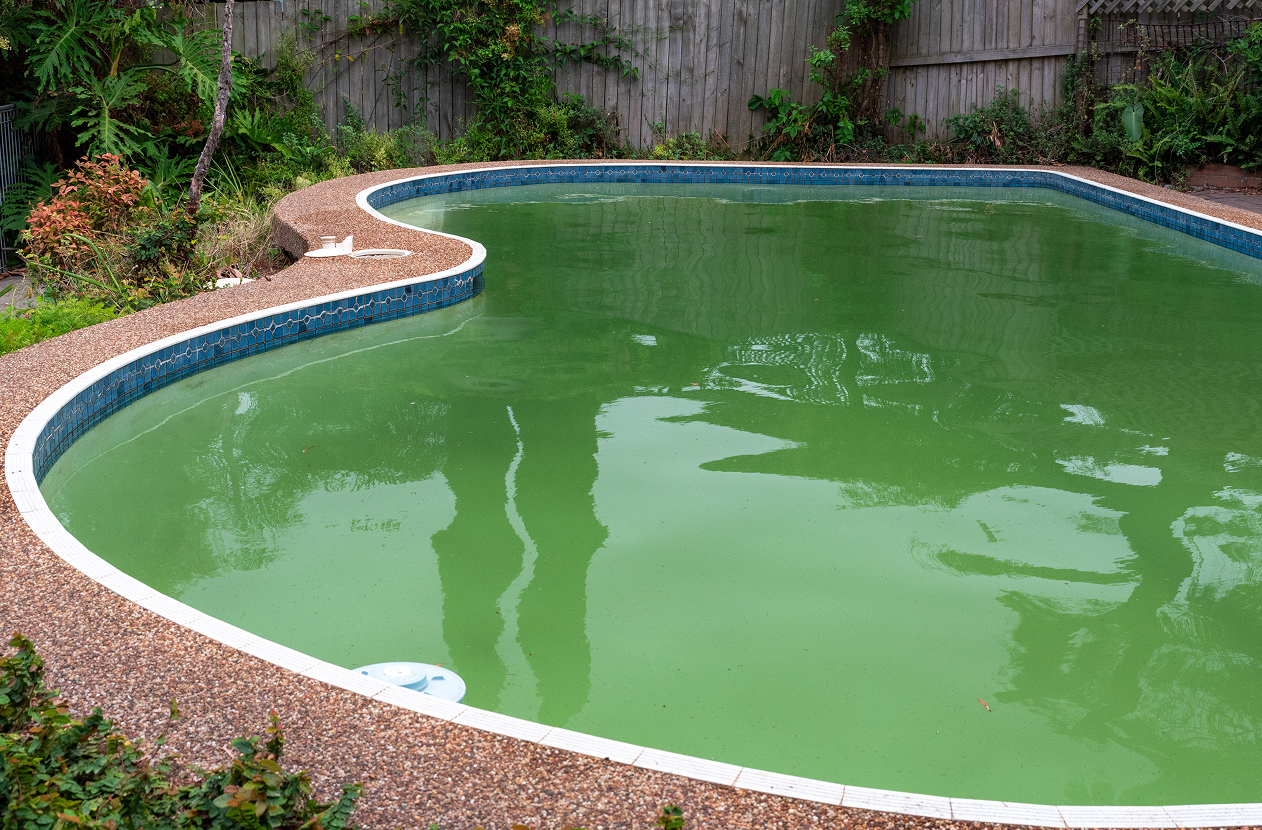
Your pool looked perfect on Monday. By Thursday, the water has a faint green tint and the steps feel slippery underfoot. In Katy’s hot summer months, that shift can happen faster than most pool owners expect, and once algae spores find their footing, they multiply into a full bloom in a matter of days.
PoolTec helps Katy homeowners keep their backyard swimming pool clear and swim-ready all season. This guide covers what causes pool algae, how quickly it spreads in our climate, and the local factors that either protect your pool or leave it vulnerable. If you’re already seeing early signs of trouble, our pool cleaning and maintenance team can help you clear it fast and keep it from coming back.
Causes of Pool Algae
Algae spores are everywhere. They travel in on wind, rain, pool toys, swimsuits, and even a garden hose filling the pool. On their own, a few spores are harmless. The problem starts when your water chemistry gives them what they need to grow: sunlight, warmth, and a food source like organic matter, carbon dioxide, or organic contaminants left behind by leaves, sweat, sunscreen, and debris.
When pH and chlorine levels drift out of range, algae stops being a distant possibility and becomes an active risk. Low chlorine levels in particular remove the one barrier standing between a clean pool and an algae bloom. A properly maintained free chlorine level breaks down algae cells before they can take hold. Once that level slips, growth accelerates.
Not All Algae Is the Same
Not all algae behaves the same way, and knowing the basic types helps you respond correctly.
- Green algae. Green algae is most common. It causes cloudy pool water and clings to pool walls, pool floor, and pool steps, turning a clear pool green within days if left untreated.
- Yellow algae (mustard algae). Yellow algae is slower to spread but stubborn. It often looks like sand or a stain on pool surfaces and resists standard chlorine treatment.
- Black algae. Black pool algae appears as black dots anchored deep into plaster or grout. It builds a protective layer that shields it from chlorine, making it the hardest type of algae to remove completely.
- Blue-green algae. Blue-green algae is actually a form of bacteria rather than true algae; blue-green algae can harbor harmful bacteria and affect water quality even in small amounts.
Each type of algae calls for a different approach to address and prevent, which is why identifying what you’re looking at before you treat it saves time and pool chemicals.
How Fast Does Pool Algae Build Up in Katy Heat?
Algae growth is a numbers game, and Katy’s climate stacks the deck. Warm water accelerates cell division, so a small patch of green pool algae can double repeatedly over a single hot weekend. Add in humidity, afternoon storms, and heavy pool party traffic, and conditions align for a bloom to appear seemingly overnight.
Sunlight is also a factor. UV rays break down chlorine faster in summer, meaning a pool that reads fine on Saturday morning can test as low chlorine by Sunday afternoon after a full day of sun exposure and swimmers. That gap gives algae spores exactly the opening they need, which can start as a cloudy pool.
Local Factors That Help or Hurt
Several conditions specific to Katy summers influence how easily algae takes hold.
- Heavy pool use. More swimmers introduce more organic contaminants like body oils and sunscreen, which feed algae and pull down your free chlorine level faster than an unused pool.
- Frequent rain and runoff. Summer storms wash organic matter and debris into the water, and rain also dilutes chlorine, creating brief windows of vulnerability.
- Extended sun exposure. Long, intense daylight hours mean more UV degradation of sanitizer, requiring more frequent testing and adjustment than cooler months demand.
- Poor circulation. A pump running on a short cycle, or an undersized filtration system, leaves stagnant zones where algae spores settle and take root, especially in corners and along pool walls.
Given how Katy summers often bring heavy pool use, storm runoff, intense sun, and circulation strain all in the same week, most local pools face several of these factors at once rather than just one.
Building an Algae Prevention Routine
Prevent algae growth by staying ahead of the conditions above rather than reacting after the water turns.
- Test water chemistry several times a week during peak summer, checking both pH levels and sanitizer levels.
- Keep your filter regularly cleaned. A clean pool filter and healthy circulation systems keep water moving and prevent the dead zones algae prefers.
- Brush pool walls, steps, and other pool surfaces weekly with a pool brush, even when the water looks clear. This disrupts spores before they can establish a colony.
- Remove visible debris promptly. Leaves and organic matter left to break down feed algae and cloud water quality.
- Store pool toys out of standing water when not in use, since they can transfer spores between pool surfaces and storage areas.
- Follow label instructions closely when adding pool chemicals. Both under- and over-dosing can throw off the balance that keeps algae from establishing.
Keeping up with this level of detail takes time most pool owners don’t have during a busy Katy summer. A consistent pool cleaning schedule with PoolTec covers testing, brushing, and filter care on your behalf, so the routine stays on track even when your week doesn’t allow for it.
What to Do to Treat Algae
If you spot cloudy water, a green tint, or early signs like a slight haze along the steps, act quickly. Left untreated, a small patch can spread across the entire pool within a day or two, and by the time algae is visible to the eye, it’s often already established on pool surfaces below the waterline.
Contact PoolTec for pool cleaning to get rid of existing pool algae growth. Our team:
- Shocks the pool with a chlorine dose calibrated to kill algae and bacteria at the same time
- Brushes affected walls, steps, and floor surfaces to loosen growth that a standard cleaning would miss
- Keeps circulation running until test results confirm the water has cleared
- Removes dead algae through backwashing or a full filter cleaning
- Handles follow-up testing, so chlorine levels are confirmed safe before swimmers go back in
Yellow and black algae need more than a single treatment. Both resist standard shock and call for repeated brushing sessions to fully clear, which is easy to under-treat without the right experience. If a pool isn’t responding after a few days of effort, that usually points to an equipment or circulation issue rather than a chemistry problem alone, something our technicians can diagnose and fix directly rather than leaving you to guess.
Let PoolTec Keep the Green Out of Your Pool This Summer
Well-maintained pools rarely develop serious algae infestations because consistent testing and cleaning catch small imbalances before they become blooms. Skipping even a few days of monitoring during a Katy summer gives pool algae the exact conditions it needs to take over.
Results can vary depending on pool size, equipment age, and how much use your pool sees, but the fundamentals stay the same: balanced chemistry, clean pool equipment, and regular attention.
We know Katy summers don’t leave much room for pool maintenance to slip. If your pool needs a deep clean, an equipment check, or a standing maintenance plan for the rest of the season, contact PoolTec today and let us help you keep the water clear all summer long.