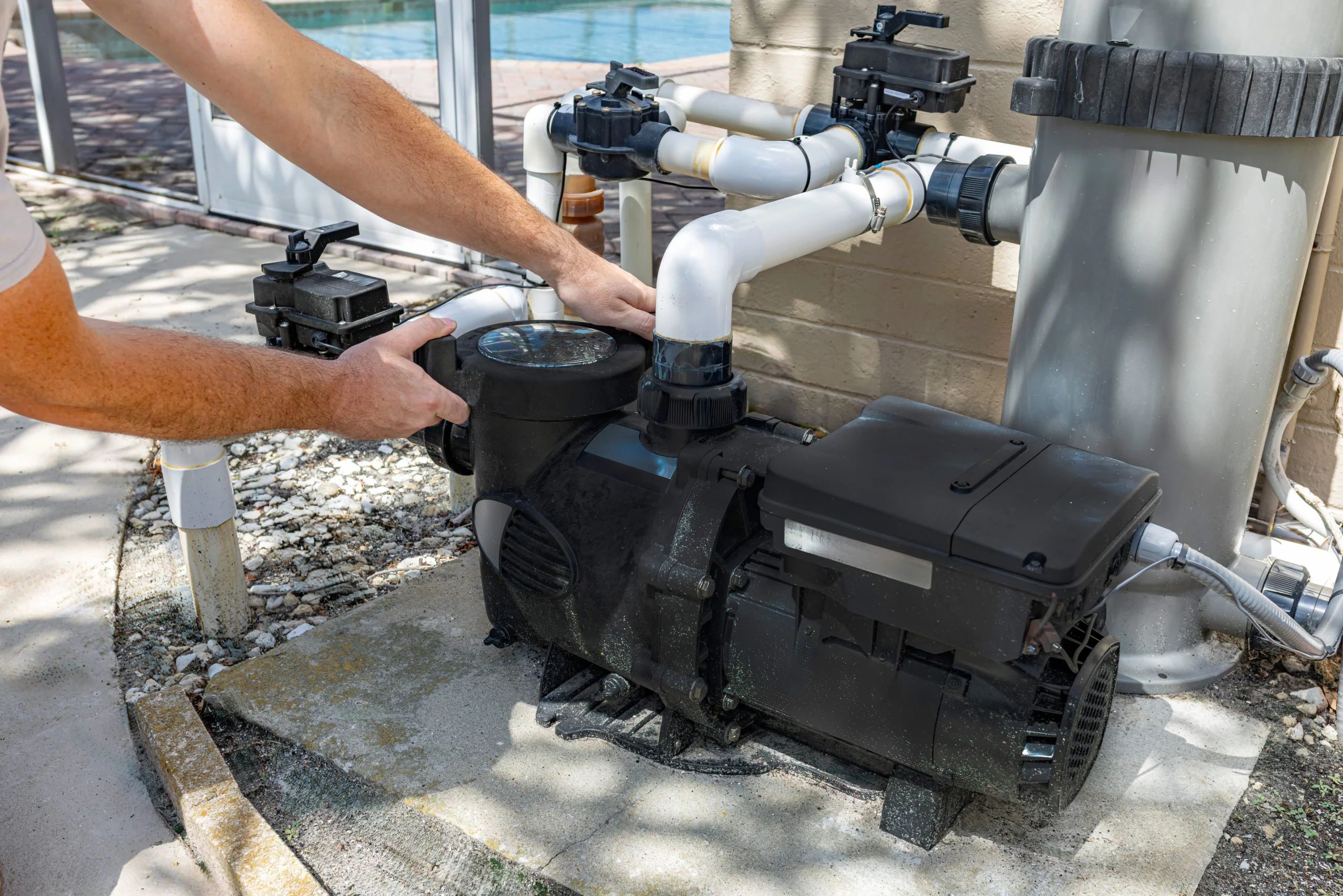
Your pool pump is supposed to keep your water clean, clear, and ready to enjoy, not sound like it’s struggling to survive another Scottsdale summer. If you’ve noticed loud noises, weak circulation, air bubbles, or reduced cleaner performance, there’s a good chance you’re dealing with pool pump suction issues.
At Crystal Falls, we help Scottsdale homeowners diagnose and resolve pool equipment problems before they turn into costly repairs. While a noisy pump or low suction can seem alarming, the issue is often tied to a clogged basket, air leak, dirty filter, or heat-worn component rather than a complete pump failure.
Before assuming your pool pump needs replacement, there are several important things Scottsdale homeowners should check first.
Why Scottsdale Pools Develop Pump Problems Faster
In Scottsdale, pool systems work harder than almost anywhere else in the country. Triple-digit temperatures, dust storms, constant evaporation, and year-round pool usage place enormous stress on pumps and the pool’s filtration systems.
We commonly see pool pump suction issues caused by:
- Heat-damaged seals and o-rings
- Dust and debris clogging circulation systems
- Air leaks from dried-out components
- Low water levels from rapid evaporation
- Overworked pumps during peak summer months
Unlike pools in cooler climates, Arizona above-ground pools and inground pools rarely get a seasonal break. Continuous operation means regular maintenance is essential for preventing larger mechanical failures.
Start Here: Diagnosing Pool Pump Suction Problems
Many pool pump suction issues are caused by simple circulation restrictions, air leaks, or heat-related wear that can develop gradually in Arizona’s harsh climate. By checking a few key components early, you may be able to prevent larger equipment damage, restore proper water flow, and keep your pool running efficiently through the hottest months of the year.
1. Start by Checking the Pump Basket
One of the easiest problems to fix is also one of the most overlooked. Your pool pump basket collects debris missed by the pool skimmer before it can reach the impeller. When the basket becomes clogged with leaves, dirt, palm debris, or desert dust, water flow becomes restricted. The pump must then work harder to circulate water, often creating loud whining or grinding sounds. Scottsdale monsoon storms make this issue especially common during summer and early fall.
If your pump sounds strained or suction feels weak:
- Turn off the pump
- Open the pump lid
- Remove the basket
- Clear all debris
- Rinse thoroughly before reinstalling
Crystal Falls recommends checking the pump basket regularly during windy or storm-heavy weeks to avoid unnecessary strain on your equipment.
2. Clean Out the Skimmer Baskets
Skimmer baskets catch debris to prevent it from entering the circulation system. When skimmer baskets fill with leaves, dirt, or desert debris, water struggles to reach the pump efficiently. A reduced flow problem has several warning signs, including:
- Weak skimmer suction
- Reduced cleaner movement
- Air bubbles in the pump
- Poor water circulation
- Increased pump noise
Cleaning out clogged skimmer baskets is one of the simplest ways to reduce the risk of ongoing pool pump suction issues.
Skimmer baskets should typically be cleaned at least once or twice per week, though some pools may require more frequent attention during monsoon season or periods of heavy debris. In Scottsdale neighborhoods with desert landscaping or mature palm trees, strainer baskets can fill quickly during windy conditions. Pool skimmer socks should be replaced every 2 to 8 weeks, depending on how much debris your pool collects and how often the pump runs.
Checking and cleaning skimmer baskets is included as part of Crystal Falls’ regular pool cleaning service because we know how important proper circulation is in Arizona’s extreme heat.
3. Look for Air Leaks Around the Pump
Air leaks are one of the most common causes of noisy pool pumps in Arizona. When air enters the suction side of the system, the pump loses efficiency and may begin making gurgling, rattling, or cavitation noises. Cavitation occurs when trapped air disrupts water flow inside the pump, potentially damaging internal components over time.
Scottsdale’s intense UV exposure causes rubber components to dry out and crack much faster than in milder climates. One major warning sign is visible air bubbles under the pump lid or blowing back into the pool through return jets.
Depending on the source of the leak, the fix may include:
- Tightening the pump lid securely
- Replacing cracked or brittle o-rings
- Lubricating seals with pool-safe silicone lubricant
- Tightening loose plumbing fittings
- Replacing heat-damaged valves or seals
- Repairing cracked suction-side plumbing
If you notice persistent air bubbles in the pump basket or return jets even after making adjustments, the leak may be hidden underground or inside the plumbing system. In those cases, professional leak detection is usually recommended.
At Crystal Falls, we inspect pool equipment for suction-side air leaks during service visits to help Scottsdale homeowners catch small problems before they turn into expensive pump damage or circulation failure.
4. Check Your Pool Water Level
Low pool water can quickly create serious circulation problems. If the water level falls below the skimmer opening, the system begins pulling air instead of pumping water. This causes noisy operation, weak suction, and increased stress on the pump motor.
Arizona’s extreme summer heat leads to rapid evaporation. In Scottsdale, pools can lose several inches of water per week during peak summer temperatures.
Crystal Falls often finds that homeowners experiencing sudden suction problems simply need to increase the water level. For best performance, keep the water level around the midpoint of the skimmer opening. Add water as needed using your garden hose.
5. Check the Pool Filter
A dirty pool filter can significantly reduce circulation and create excessive pressure inside the system. As filter media becomes clogged with dust, sunscreen residue, debris, and fine desert particles, water struggles to pass through properly. This forces the pump to work harder, increasing wear on the motor and reducing suction performance.
Common signs of a dirty filter include:
- Weak return flow
- High pressure gauge readings
- Cloudy water
- Increased pump noise
- Reduced cleaner performance
Crystal Falls recommends more frequent filter cleanings during Scottsdale’s dust storm season since fine desert debris accumulates much faster than many homeowners realize. If you’ve signed up for regular pool cleaning with us, one of our pool cleaners can handle this for you, whether your pool uses a sand filter, DE filter, or cartridge filter.
6. Inspect for a Clogged Impeller
If the baskets and filter are clean but pool vacuum suction still feels weak, debris may be trapped inside the pump’s impeller.
The impeller is responsible for pulling water through the circulation system. Small debris such as pebbles, hair, twigs, or plant material can block the impeller blades and reduce water movement. A clogged impeller may cause:
- Loud humming sounds
- Weak circulation
- Poor suction
- Pump overheating
Because accessing the impeller often requires partial pump disassembly, professional service is usually recommended to avoid accidental damage.
When to Call Crystal Falls
Some pool pump suction issues are simple fixes, while others require professional diagnostics. If you’ve cleaned the baskets, checked the water level, inspected the filter, and still notice poor circulation or unusual pump noise, it’s time for expert help.
Crystal Falls provides professional pool equipment inspections and repair services specifically for Scottsdale’s demanding climate. Our team can identify hidden air leaks, evaluate equipment wear, inspect motors and impellers, and restore proper circulation before larger problems develop.
Keep Your Pool Running Smoothly Year-Round
In Scottsdale, pool systems endure intense heat, dust, and nearly nonstop operation. Without regular maintenance, even small pool suction and circulation issues can escalate into expensive equipment failures.
The good news is that many pool pump suction issues begin with simple, preventable problems. By checking baskets, maintaining proper water levels, monitoring filters, and responding quickly to unusual noises, homeowners can protect their equipment and keep their pools swim-ready year-round.
If your pump sounds louder than normal or your pool circulation seems weak, you may not need a new pool pump. Crystal Falls can help diagnose the problem and fix the issue so your equipment will work properly, no matter how hot Arizona gets. Contact us today to schedule service.